

Just weeks after his appointment earlier this year, I unexpectedly texted Federal Housing Minister Nate Erskine-Smith on a Saturday night. After managing to get his number through a colleague, I urged him to expedite the release of funding for our city from the Federal Housing Accelerator Fund.
Within days, we were on a Zoom call discussing how this funding could drive our city’s historic actions in making housing more affordable. A proactive 250-character text underscored a universal truth: solving this housing crisis depends on swift action across all levels of government, effective collaboration, and disrupting the status quo.
When I took office as Mayor of Mississauga last summer, one issue dominated nearly every conversation, the increasingly unaffordable housing market. From young adults and families priced out of the market to seniors struggling to downsize, the housing reality in Mississauga and many cities across Canada is disheartening. Our communities are built on the dream of homeownership, but that dream is slipping out of reach for too many.
It’s a story we’ve all heard. Young people unable to afford rent, let alone buy a home; families crushed by rising mortgage payments; seniors locked into homes that no longer serve their needs. Despite the urgent need, progress has been slow. In the Greater Toronto Area (GTA), the crisis is unfolding rapidly. New home sales in 2024 hit their lowest point since 1990, with December marking the worst month in 40 years. Only 310 homes were sold in that month, 80% below the 10-year average. These aren’t just statistics; they reflect real struggles. Families who can’t find homes, young people delaying their futures, and a market that’s become inaccessible.
Mississauga isn’t immune. For too long, we’ve been stalled by a system more focused on preserving the status quo of bureaucracy than creating homes. High development fees, lengthy approval processes, and a lack of coordination between city officials and builders have made new homes more expensive and time-consuming. These barriers have worsened affordability, making things harder for Canadians and our residents, and they need to change.
We cannot afford to wait any longer. As a municipality, Mississauga has a unique role to play. While we don’t control federal interest rates or provincial housing decisions, we influence the planning and development processes shaping our city. This led to the creation of the Mayor’s Housing Task Force two weeks after I took office.
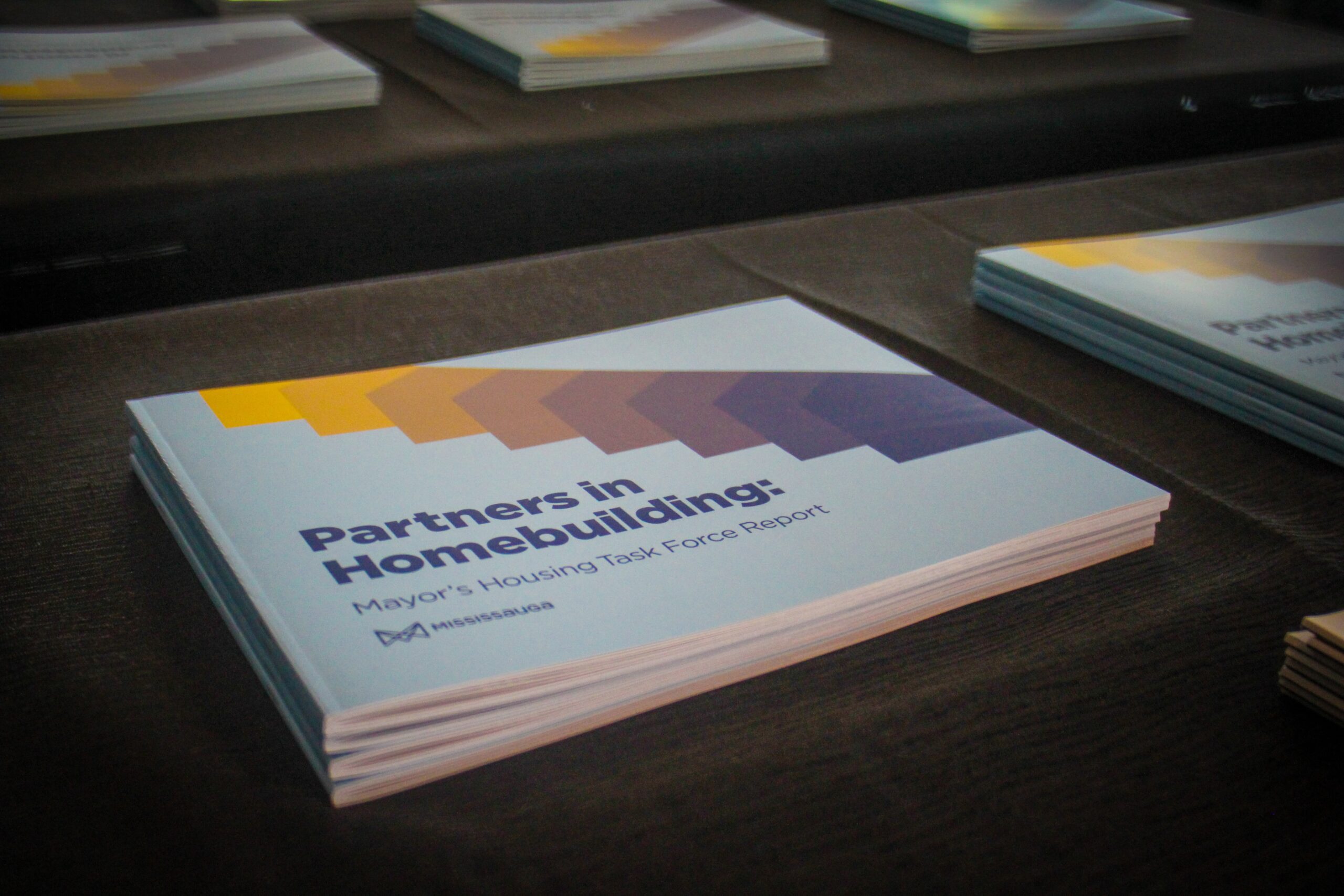
Our task was clear: identify barriers to building more affordable housing and develop actionable solutions. The task force brought together over 30 experts, including developers, non-profit organizations, and city planners. What emerged was a new and unlikely model of collaboration, bringing together those who build housing (the industry) and those who approve it (the city). This resulted in our Partners in Building report, a comprehensive set of 30 recommendations designed to speed up development, lower costs, and increase the supply of affordable housing in Mississauga. The goal was simple – build more homes but make them cheaper and faster.
Some skeptics questioned why we would engage closely with developers, whose primary focus is typically profit. However, a lack of collaboration only hinders the building of more affordable homes, leaving residents to suffer from high prices and a shortage of housing. By bringing developers to the table, we’re ensuring they build more and more affordably, so the housing they create meets the needs of everyone, not just the wealthiest.
In January 2025, Mississauga took a bold step forward. City Council passed a motion implementing the task force’s key recommendations. These changes represent one of the most significant housing initiatives in our city’s history. It reduces development charges, fees paid by builders to fund municipal services, by 50% for all residential projects and eliminates them entirely for three-bedroom purpose-built rental units. By deferring these charges until the first occupancy permit is issued, we’re easing the financial burden that typically delays construction to get more shovels in the ground quicker.
To put this into perspective, prospective homeowners can save over $28,000 on their future homes with our policy changes. But our work doesn’t stop there. We’ve updated our Official Plan to permit an additional 124,000 housing units, bringing our city’s total capacity to 370,000 new units by 2051. We’re streamlining approvals with a new “three strikes and you’re in” model, reducing endless back-and-forth in the planning process. Instead of taking years to approve a project, we’re creating a culture of “getting to yes” that benefits both builders and residents.

These changes are about more than just increasing the number of homes, we’re also focused on affordability. If we unlock more housing supply but leave vacant homes listed at prices no one can afford, we’ve only tackled part of the problem. By incentivizing purpose-built rentals and supporting non-profit housing projects, we’re ensuring the housing we create meets the needs of all residents, not just those at the top of the market.
Municipalities cannot address this crisis alone. Support from provincial and federal governments is essential. Increased funding through programs like the Housing Accelerator Fund (HAF) helps cover revenue losses that typically support maintaining essential services.
Cities rely on federal funds to drive much-needed change, but those funds won’t come unless we, at the local level, clear the path by addressing bureaucratic hurdles. It’s a two-way street. While the federal government provides the resources, we must unlock them to avoid stalling progress. If we don’t act quickly, we risk being stuck in a system that leaves our residents without the homes they need.
The urgency of this crisis cannot be overstated. When young people leave because they can’t afford to live here, we lose the talent and energy that drive our economy. When families struggle to find affordable homes, we risk deepening inequality and undermining the social fabric that holds our communities together. And when seniors can’t find suitable housing, it puts additional pressure on an already strained system. We must step up to the challenge and do our part as cities and governments.
As cities, we owe it to our residents to ensure affordable housing is within reach, and as governments, we share a duty to act. Mississauga has shown that building more homes, faster, and with greater affordability is possible, but we cannot do it alone.
Our task force’s work is a model that other municipalities can follow, and we’re calling on all levels of government and the housing industry to take responsibility and join us in solving this crisis. Disrupting the status quo has already begun to change the tone of development in Mississauga, fostering a shared commitment to building the homes our city needs. By working together, we can close the gap, make housing more affordable for everyone, and create a fairer, more equitable future—starting now.
To learn more about the full set of recommendations and our plans, I invite you to read our Partners in Building report.