
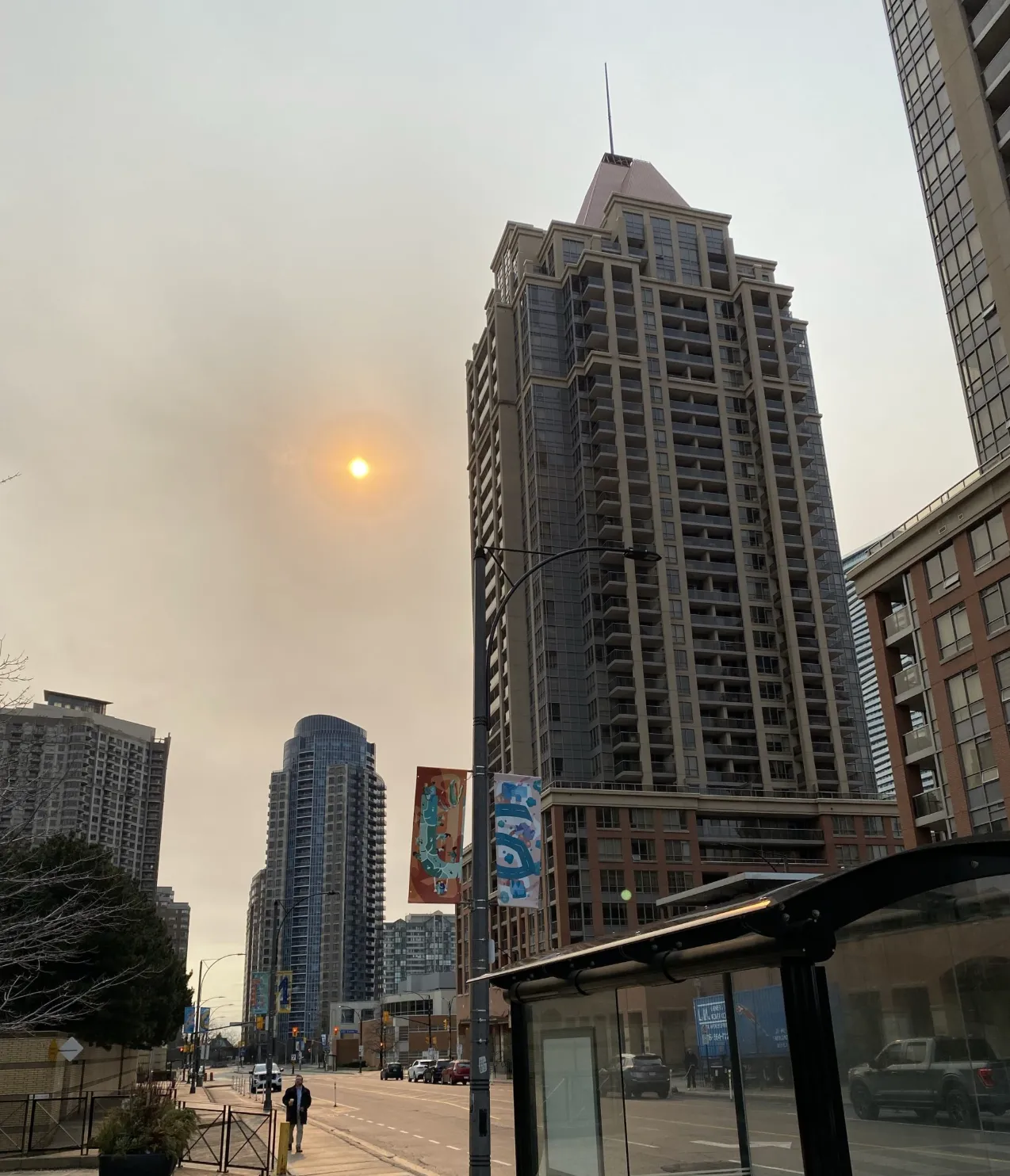
Wildfire season is underway in Canada, with fires burning across several regions, including northern Ontario. Smoke is now affecting southern Ontario, including Mississauga, leading to poor air quality and reduced visibility.
July 15, 2026
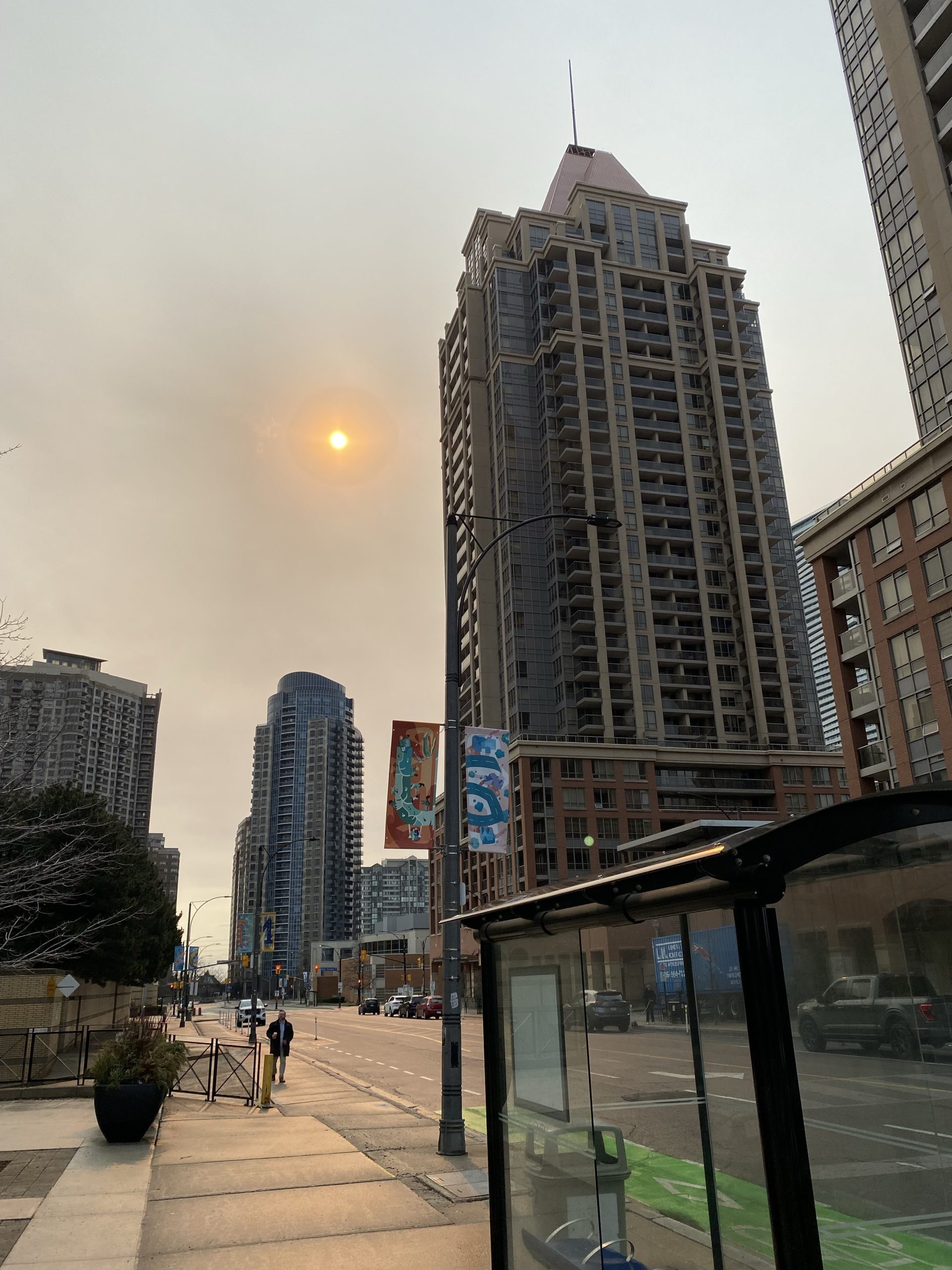
Smoke from forest fires is expected to impact air quality in Mississauga, with conditions that may persist through the day. As smoke levels rise, so do health risks — making it important for residents to stay informed and take steps to protect themselves.
Wildfire smoke can travel long distances and differs from typical urban air pollution. It contains fine particles and harmful gases that can enter the lungs and bloodstream, potentially causing inflammation and affecting overall health.
Environment and Climate Change Canada (ECCC) monitors and reports air quality using the Air Quality Health Index (AQHI) and issues Special Air Quality Statements when conditions worsen. Residents are encouraged to check these tools regularly.
Poor air quality and health impacts
Exposure to wildfire smoke can cause a range of symptoms. As conditions worsen, the likelihood of health effects increases.
Common symptoms include:
- Eye, nose and throat irritation
- Headaches
- Mild cough
More serious (but less common) symptoms include:
- Wheezing
- Chest pain
- Severe coughing
If you experience severe symptoms or think you may be having a medical emergency, seek immediate medical attention.
People who are more likely to be impacted include:
- Adults aged 65 and older
- Pregnant people
- Infants and young children
- People with existing health conditions, especially heart or lung issues
- People who work outdoors
These groups should reduce or reschedule strenuous outdoor activities and seek medical advice if symptoms develop.
Reduce your exposure
Reducing your exposure to smoke is the best way to protect your health. As air quality worsens, residents should limit time outdoors and adjust daily activities where possible.
Take these steps to stay safe:
- Limit time outdoors and reschedule sports, events or strenuous activities
- Stay indoors as much as possible
- Keep windows and doors closed, especially when air quality is poor
- During extreme heat, prioritize keeping cool while minimizing smoke exposure
- Check on neighbours, friends and family members who may be more vulnerable
If you must be outdoors, a well-fitting respirator mask (such as an N95 or equivalent) can help reduce exposure to fine particles, though some health risk may remain.
Improve indoor air quality
Taking steps to protect indoor air can make a significant difference during smoke events.
To improve air quality at home:
- Use the highest-quality air filter your HVAC system can support
- Use a certified portable air cleaner to filter fine particles
- Set your ventilation system to recirculate air when outdoor air quality is poor
- Limit the use of exhaust fans that can draw smoke indoors
If needed, consider spending time in public spaces like libraries, community centres, or shopping malls, which often have better air filtration systems.
Stay informed
Air quality conditions can change quickly. Residents are encouraged to:
- Monitor the AQHI and local weather updates
- Download the WeatherCAN app for alerts
- Follow guidance from local authorities and public health officials
Staying informed helps you take action early to protect your health and reduce exposure.
Wildfires and climate change
Climate change is contributing to more frequent and intense wildfires. Hotter, drier conditions make forests more prone to burning and allow fires to spread faster and further.
As a City, we are adopting proactive measures, including better forest management, community preparedness, and plans aimed at mitigating climate change, to reduce the occurrence and impact of these destructive events in our community.